

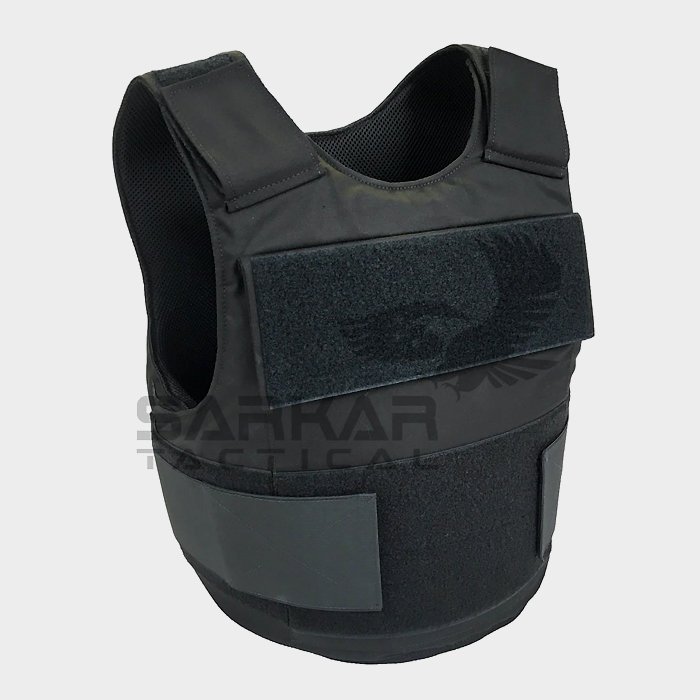
Stab Proof Vests UK: The Complete Guide to Stab-Resistant Body Armour
Knife crime in England and Wales has remained at historically elevated levels. According to the Office for National Statistics, the year ending March 2024 recorded over 49,000 knife-related offences. For security professionals, law enforcement officers, prison staff, and others who work in high-risk environments, stab resistant vest UK body armour is no longer an optional consideration — it is a critical piece of personal protective equipment.
This guide explains exactly what Stab Proof Vests UK are, how they work, what the United Kingdom’s testing and certification standards require, and how to select the right protection level for your specific role. All content is based on the Home Office Body Armour Standard (2017), the CAST (Centre for Applied Science and Technology) testing framework, and established materials science.
Note: Sarkar Tactical designs and manufactures stab-resistant and multi-threat body armour in Glasgow, Scotland. All products are manufactured to UK Home Office CAST certification standards.
What Is a Stab-Resistant Vest — and Why ‘Stab Proof’ Is a Misnomer
The term ‘stab proof vest’ is widely used but technically inaccurate. No vest can guarantee complete protection against every conceivable blade, under all conditions. The correct term is stab-resistant — meaning the vest is designed and certified to resist penetration from specified blade types, at defined energy levels, in controlled testing conditions.
How Stab-Resistant Vests Work
Stab-resistant vests work through one of two primary mechanisms, or a combination of both:
- Tight-weave fabric panels — high-strength fibres (such as Dyneema® UHMWPE or Twaron® aramid) woven into a structure dense enough that a blade tip cannot penetrate between individual threads. The weave deflects and blunts the blade rather than allowing it to pass through.
- Rigid plate inserts — thin layers of polycarbonate, titanium, or chain-link steel placed within the vest carrier. These plates physically block blade penetration regardless of blade sharpness or strike angle.
- Hybrid construction — many modern vests combine both approaches, using woven fabric as the primary layer with a rigid plate backing to defeat spike threats.
Why Ballistic Vests Do Not Stop Knives
This is one of the most dangerous misconceptions in personal protection. Ballistic vests — designed to stop bullets — work by catching and deforming a projectile as it impacts tightly woven ballistic fibres. A bullet mushrooms on impact, dispersing force across a wide area.
A knife blade, however, has a sharp point and edge that slides between fibres rather than deforming against them. Standard ballistic material (woven Kevlar® or Dyneema®) offers little resistance to a knife thrust. Wearing a ballistic vest against a blade threat does not provide stab protection unless the vest is also specifically certified for stab resistance.
What Stab-Resistant Vests Do Not Protect Against
- High-velocity rifle rounds or pistol rounds (unless the vest includes a ballistic-rated panel)
- Impacts to uncovered areas (neck, groin, underarms)
- Repeated sustained attacks that exceed the vest’s tested energy thresholds
- Threats the vest was not tested against — always check the specific certifications
UK Standards for Stab-Resistant Body Armour: CAST, KR, SP, and HO1
The United Kingdom uses its own domestic testing and certification framework for body armour, administered by the Centre for Applied Science and Technology (CAST), which operates under the Home Office. This is separate from the United States NIJ (National Institute of Justice) standards, though the two are broadly similar in concept.
The Home Office Body Armour Standard (2017)
The definitive document governing body armour sold to UK police and law enforcement is the Home Office Body Armour Standard, published in 2017. This standard defines the testing protocols, certification requirements, production quality testing (PQT), and in-life monitoring (ILM) obligations for armour worn in operational policing.
The standard classifies protection across three separate threat categories:
Knife Resistance: KR1 and KR2
Knife resistance testing uses a standardised blade to simulate a downward strike at defined energy levels (measured in joules). The blade must not penetrate beyond a set depth into the backing material.
- KR1 — Designed to resist a knife strike at 24 joules of energy. This covers a wide range of common blade threats and is the minimum level recommended for general security and prison officer use.
- KR2 — Designed to resist a knife strike at 33 joules of energy. A higher energy level representing more forceful attacks. Required for roles with elevated threat profiles.
Spike Protection: SP1 and SP2
Spike threats — needles, screwdrivers, pointed tools, and improvised weapons — behave differently from bladed threats. A spike does not need a sharp edge; it simply needs sufficient force to push through fabric. Standard stab protection may not resist spike threats.
- SP1 — Resistance to a spike threat at 24 joules. Minimum recommended for prison environments where improvised weapons are common.
- SP2 — Resistance to a spike threat at 33 joules.
The HO1 KR1 SP1 Multi-Threat Standard
HO1 KR1 SP1 is the combined standard that UK police forces typically specify for general-issue body armour. It requires the vest to simultaneously meet:
- Ballistic protection to a defined handgun threat level (HO1)
- Knife resistance at KR1 (24 joules)
- Spike resistance at SP1 (24 joules)
This multi-threat standard reflects the operational reality that police officers face firearms, bladed weapons, and improvised weapons — often without advance warning of which threat they will encounter.
CE and UKCA Marking
Body armour sold commercially in the United Kingdom must bear either a CE mark (pre-Brexit recognition) or UKCA (UK Conformity Assessed) mark under the Personal Protective Equipment (Enforcement) Regulations 2018. This legal requirement applies to all armour sold to civilians. Purchasing armour without appropriate conformity marking carries legal risk for the supplier and may indicate uncertified — potentially unsafe — equipment.
Types of Stab-Resistant Vests Available in the UK
Covert Stab Vests
Designed to be worn beneath clothing, covert vests are thin, lightweight, and shaped to be as discreet as possible. They are widely used by:
- Close protection (CP) operatives
- Plain-clothes security staff
- Retail security and loss prevention officers
- Door supervisors who prefer discretion
Covert vests typically sacrifice some protection level for wearability and concealability. However, modern covert designs can achieve KR1 SP1 certification at weights and thicknesses suitable for full-day wear.
Overt Stab Vests
Worn visibly over clothing, overt vests are the standard issue for uniformed police officers, prison staff, and security guards. They typically offer higher protection levels, greater coverage, and more accessory attachment points (MOLLE webbing, radio loops, handcuff pouches).
Multi-Threat Vests
Combining both stab and ballistic protection in a single garment, multi-threat vests are the standard for UK police. The vest achieves HO1 KR1 SP1 through a combination of ballistic-rated soft armour panels and additional stab-resistant layers.
Specialist and Bespoke Options
Some roles require purpose-built solutions: vests with female-specific cuts, healthcare tabard formats for prison medical staff, or extended coverage for specific operational profiles. Sarkar Tactical manufactures bespoke vests to customer specification.
Who Needs a Stab-Resistant Vest in the UK?
Police Officers
All frontline police officers in England, Wales, and Scotland are issued body armour as standard. Most forces issue multi-threat vests meeting HO1 KR1 SP1. The Authorised Professional Practice (APP) framework from the College of Policing supports the mandatory wearing of body armour in most operational contexts.
Prison Officers
Following a series of high-profile attacks on prison staff — including the 2023 attack at HMP Frankland — the UK government has committed to equipping all prison officers with stab-resistant vests. The Prison Officers’ Association (POA) has long campaigned for mandatory vest provision across the estate.
Security Guards and Door Supervisors
Security Industry Authority (SIA) licensed door supervisors working in high-risk venues, as well as cash-in-transit and retail security staff in knife-crime hotspots, increasingly wear stab-resistant vests. Under the Health and Safety at Work Act 1974, employers have a duty to assess foreseeable risks and provide appropriate PPE — which may include body armour.
Healthcare Workers
NHS Protect guidance and various NHS trust policies recognise the need for stab-resistant vests for certain community mental health, ambulance, and emergency department staff working in high-risk environments.
Journalists and NGO Workers
Media organisations and NGOs operating in conflict zones or high-risk areas frequently specify stab-resistant vests for field staff, often combined with ballistic protection.
How to Choose the Right Stab Vest: Six Key Factors
1. Match Protection Level to Your Threat Environment
Do not over-specify or under-specify. KR1 SP1 is appropriate for most security and law enforcement roles. KR2 SP2 is required where more forceful attacks are foreseeable. Always conduct a written risk assessment before specifying armour.
2. Overt or Covert?
If your role requires discretion, a covert vest is appropriate. If visibility is part of your deterrence strategy — or if your role involves physical confrontation — an overt vest typically offers better protection and load-bearing capability.
3. Weight and Wearability for Extended Shifts
A vest that is too heavy or uncomfortable will be removed by the wearer. A vest that is not worn provides zero protection. Modern aramid and UHMWPE materials have significantly reduced vest weights. For 12-hour shifts, target a vest weight below 2.0 kg wherever possible at the required protection level.
4. Correct Fit — Especially for Female Wearers
Body armour must fit correctly to protect correctly. Coverage gaps at the sides, shoulders, or groin occur when male-pattern vests are worn by female officers. The Home Office Body Armour Standard (2017) includes a female torso testing surrogate specifically to address this. Sarkar Tactical manufactures armour to female sizing specifications.
5. Certification — What to Check Before Buying
- Look for UK Home Office CAST certification, not just ‘tested to CAST standards’
- Verify CE/UKCA marking is present and legible
- Ask the supplier for the test report reference number
- Confirm the armour is within its stated service life (typically 5 years from manufacture)
6. Service Life and Maintenance
Body armour degrades over time. UV exposure, moisture, and physical damage all reduce the protective performance of ballistic and stab-resistant materials. Most manufacturers specify a 5-year service life from the date of manufacture. Vests should be inspected regularly and replaced in accordance with the manufacturer’s guidance.
Is It Legal to Wear a Stab-Resistant Vest in the UK?
Yes. There is no legislation in England, Wales, or Scotland that restricts the purchase, ownership, or wearing of body armour by civilians. Any adult may legally purchase and wear a stab-resistant vest.
The single relevant legal provision is Section 57A of the Crime and Security Act 2010 (inserted into the Criminal Justice and Courts Act 2015), which makes it a specific aggravating factor in sentencing if a person was wearing body armour at the time of committing an offence. Wearing armour to facilitate crime is treated more seriously by courts — but the mere act of wearing armour is not itself an offence.
CE/UKCA marking is legally required on armour sold commercially. Purchasing uncertified armour does not itself expose the buyer to criminal liability, but the seller may be in breach of the Personal Protective Equipment (Enforcement) Regulations 2018.
Frequently Asked Questions
Does a stab-resistant vest stop a knife?
A vest certified to the relevant CAST knife resistance standard (KR1 or KR2) will resist penetration from a blade strike at the defined energy level. No vest can guarantee protection in all circumstances. The vest must be correctly fitted, within its service life, and worn in the area of the body it covers.
What is the difference between a stab vest and a bulletproof vest?
A stab-resistant vest is designed to resist blade penetration using tight-weave fabric or rigid inserts. A ballistic vest is designed to absorb and disperse the energy of a bullet using multiple layers of woven ballistic fibre. The two use different materials and mechanisms. A ballistic vest does not provide meaningful stab protection. A multi-threat vest combines both.
How long does a stab vest last?
Most manufacturers specify a service life of five years from the date of manufacture. Beyond this point, the structural integrity of the protective materials may be compromised. Always check the manufacture date label inside the vest.
Can a civilian buy a stab-resistant vest in the UK?
Yes. There are no restrictions on purchase, ownership, or wear by civilians in the UK.
What level stab vest do UK police wear?
Most UK police forces issue multi-threat vests certified to HO1 KR1 SP1 — providing simultaneous ballistic, knife, and spike protection under the Home Office Body Armour Standard (2017).
Selecting a Compliant Stab-Resistant Vest
Stab-resistant body armour is a well-tested, standards-governed category of personal protective equipment. The UK’s CAST certification framework — including KR1, KR2, SP1, and SP2 levels — provides a rigorous basis for specifying the right protection for your threat environment.
The most important decisions are: matching your protection level to a written risk assessment, ensuring the vest fits correctly for your body, and buying only armour that carries genuine CAST certification and CE/UKCA marking.
Sarkar Tactical manufactures stab-resistant and multi-threat body armour in Glasgow to UK Home Office CAST standards. Contact our team to discuss your specific requirements or to request a procurement quotation.
Explore our range of stab-resistant vests, manufactured in the UK to KR1 and SP1 standards.
